ARG64386
anti-ARMET antibody
anti-ARMET antibody for Western blot and Human
Cancer antibody; Neuroscience antibody
Overview
| Product Description | Goat Polyclonal antibody recognizes ARMET |
|---|---|
| Tested Reactivity | Hu |
| Predict Reactivity | Ms, Rat, Dog |
| Tested Application | WB |
| Host | Goat |
| Clonality | Polyclonal |
| Isotype | IgG |
| Target Name | ARMET |
| Antigen Species | Human |
| Immunogen | KFCREARGKENR |
| Conjugation | Un-conjugated |
| Alternate Names | ARP; Arginine-rich protein; Protein ARMET; ARMET; Mesencephalic astrocyte-derived neurotrophic factor |
Application Instructions
| Application Suggestion |
|
||||
|---|---|---|---|---|---|
| Application Note | WB: Recommend incubate at RT for 1h. * The dilutions indicate recommended starting dilutions and the optimal dilutions or concentrations should be determined by the scientist. |
Properties
| Form | Liquid |
|---|---|
| Purification | Purified from goat serum by antigen affinity chromatography. |
| Buffer | Tris saline (pH 7.3), 0.02% Sodium azide and 0.5% BSA. |
| Preservative | 0.02% Sodium azide |
| Stabilizer | 0.5% BSA |
| Concentration | 0.5 mg/ml |
| Storage Instruction | For continuous use, store undiluted antibody at 2-8°C for up to a week. For long-term storage, aliquot and store at -20°C or below. Storage in frost free freezers is not recommended. Avoid repeated freeze/thaw cycles. Suggest spin the vial prior to opening. The antibody solution should be gently mixed before use. |
| Note | For laboratory research only, not for drug, diagnostic or other use. |
Bioinformation
| Database Links |
Swiss-port # P55145 Human Mesencephalic astrocyte-derived neurotrophic factor |
|---|---|
| Background | The protein encoded by this gene is localized in the endoplasmic reticulum (ER) and golgi, and is also secreted. Reducing expression of this gene increases susceptibility to ER stress-induced death and promotes cell proliferation. The protein was initially thought to be longer at the N-terminus and to contain an arginine-rich region but transcribed evidence indicates a smaller open reading frame that does not encode the arginine tract. The presence of polymorphisms in the arginine-rich region, including a specific mutation that changes the previously numbered codon 50 from ATG to AGG, have been reported in a variety of solid tumors; however, these polymorphisms were later shown to exist in normal tissues and are thus not tumor-related. [provided by RefSeq, Jun 2010] |
| Research Area | Cancer antibody; Neuroscience antibody |
| Calculated MW | 21 kDa |
| PTM | May contain sialic acid residues. |
Images (1) Click the Picture to Zoom In
-
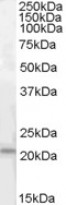
ARG64386 anti-ARMET antibody WB image
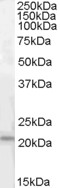
Western Blot: Human Pancreas lysate (35 µg protein in RIPA buffer) stained with ARG64386 anti-ARMET antibody at 0.3 µg/ml dilution.