ARG41009
anti-CD204 / MSR1 antibody
anti-CD204 / MSR1 antibody for ICC/IF,Western blot and Human,Mouse,Rat
Overview
| Product Description | Rabbit Polyclonal antibody recognizes CD204 / MSR1 |
|---|---|
| Tested Reactivity | Hu, Ms, Rat |
| Tested Application | ICC/IF, WB |
| Host | Rabbit |
| Clonality | Polyclonal |
| Isotype | IgG |
| Target Name | CD204 / MSR1 |
| Antigen Species | Human |
| Immunogen | Recombinant fusion protein corresponding to aa. 192-451 of Human MSR1 (NP_619729.1). |
| Conjugation | Un-conjugated |
| Alternate Names | Macrophage scavenger receptor types I and II; SR-A; SCARA1; Macrophage acetylated LDL receptor I and II; SRA; CD antigen CD204; Scavenger receptor class A member 1; CD204; phSR1; phSR2 |
Application Instructions
| Application Suggestion |
|
||||||
|---|---|---|---|---|---|---|---|
| Application Note | * The dilutions indicate recommended starting dilutions and the optimal dilutions or concentrations should be determined by the scientist. | ||||||
| Positive Control | PC3 | ||||||
| Observed Size | 63 kDa |
Properties
| Form | Liquid |
|---|---|
| Purification | Affinity purified. |
| Buffer | PBS (pH 7.3), 0.02% Sodium azide and 50% Glycerol. |
| Preservative | 0.02% Sodium azide |
| Stabilizer | 50% Glycerol |
| Storage Instruction | For continuous use, store undiluted antibody at 2-8°C for up to a week. For long-term storage, aliquot and store at -20°C. Storage in frost free freezers is not recommended. Avoid repeated freeze/thaw cycles. Suggest spin the vial prior to opening. The antibody solution should be gently mixed before use. |
| Note | For laboratory research only, not for drug, diagnostic or other use. |
Bioinformation
| Database Links |
Swiss-port # P21757 Human Macrophage scavenger receptor types I and II Swiss-port # P30204 Mouse Macrophage scavenger receptor types I and II |
|---|---|
| Gene Symbol | MSR1 |
| Gene Full Name | macrophage scavenger receptor 1 |
| Background | This gene encodes the class A macrophage scavenger receptors, which include three different types (1, 2, 3) generated by alternative splicing of this gene. These receptors or isoforms are macrophage-specific trimeric integral membrane glycoproteins and have been implicated in many macrophage-associated physiological and pathological processes including atherosclerosis, Alzheimer's disease, and host defense. The isoforms type 1 and type 2 are functional receptors and are able to mediate the endocytosis of modified low density lipoproteins (LDLs). The isoform type 3 does not internalize modified LDL (acetyl-LDL) despite having the domain shown to mediate this function in the types 1 and 2 isoforms. It has an altered intracellular processing and is trapped within the endoplasmic reticulum, making it unable to perform endocytosis. The isoform type 3 can inhibit the function of isoforms type 1 and type 2 when co-expressed, indicating a dominant negative effect and suggesting a mechanism for regulation of scavenger receptor activity in macrophages. [provided by RefSeq, Jul 2008] |
| Function | Membrane glycoproteins implicated in the pathologic deposition of cholesterol in arterial walls during atherogenesis. Two types of receptor subunits exist. These receptors mediate the endocytosis of a diverse group of macromolecules, including modified low density lipoproteins (LDL). Isoform III does not internalize acetylated LDL. [UniProt] |
| Cellular Localization | Membrane; Single-pass type II membrane protein. [UniProt] |
| Calculated MW | 50 kDa |
Images (2) Click the Picture to Zoom In
-
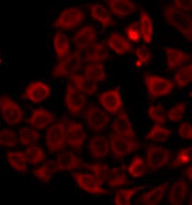
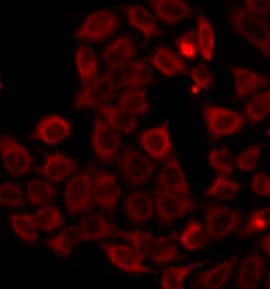
ARG41009 anti-CD204 / MSR1 antibody ICC/IF image
Immunofluorescence: HeLa cells stained with ARG41009 anti-CD204 / MSR1 antibody.
-
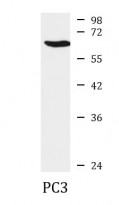
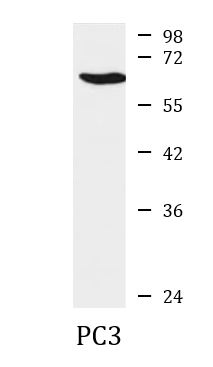
ARG41009 anti-CD204 / MSR1 antibody WB image
Western blot: 25 µg of PC3 cell lysate stained with ARG41009 anti-CD204 / MSR1 antibody at 1:1000 dilution.