ARG66979
anti-CTGF antibody
anti-CTGF antibody for ICC/IF,IHC-Formalin-fixed paraffin-embedded sections,Western blot and Human,Mouse
Overview
| Product Description | Rabbit Polyclonal antibody recognizes CTGF |
|---|---|
| Tested Reactivity | Hu, Ms |
| Predict Reactivity | Rat |
| Tested Application | ICC/IF, IHC-P, WB |
| Host | Rabbit |
| Clonality | Polyclonal |
| Isotype | IgG |
| Target Name | CTGF |
| Antigen Species | Human |
| Immunogen | Synthetic peptide around the middle region of Human CTGF. |
| Conjugation | Un-conjugated |
| Alternate Names | Insulin-like growth factor-binding protein 8; IGFBP-8; CCN2; IBP-8; HCS24; Connective tissue growth factor; IGF-binding protein 8; CCN family member 2; IGFBP8; Hypertrophic chondrocyte-specific protein 24; NOV2 |
Application Instructions
| Application Suggestion |
|
||||||||
|---|---|---|---|---|---|---|---|---|---|
| Application Note | IHC-P: Antigen Retrieval: Boil tissue section in Sodium Citrate buffer (pH 6.0) * The dilutions indicate recommended starting dilutions and the optimal dilutions or concentrations should be determined by the scientist. |
||||||||
| Positive Control | HepG2; Spleen; Skin carcinoma |
Properties
| Form | Liquid |
|---|---|
| Purification | Affinity purified. |
| Buffer | 100 mM Tris Glycine (pH 7.0), 0.025% ProClin 300 and 20% Glycerol. |
| Preservative | 0.025% ProClin 300 |
| Stabilizer | 20% Glycerol |
| Storage Instruction | For continuous use, store undiluted antibody at 2-8°C for up to a week. For long-term storage, aliquot and store at -20°C or below. Storage in frost free freezers is not recommended. Avoid repeated freeze/thaw cycles. Suggest spin the vial prior to opening. The antibody solution should be gently mixed before use. |
| Note | For laboratory research only, not for drug, diagnostic or other use. |
Bioinformation
| Database Links | |
|---|---|
| Gene Symbol | CTGF |
| Gene Full Name | connective tissue growth factor |
| Background | The protein encoded by this gene is a mitogen that is secreted by vascular endothelial cells. The encoded protein plays a role in chondrocyte proliferation and differentiation, cell adhesion in many cell types, and is related to platelet-derived growth factor. Certain polymorphisms in this gene have been linked with a higher incidence of systemic sclerosis. [provided by RefSeq, Nov 2009] |
| Function | Major connective tissue mitoattractant secreted by vascular endothelial cells. Promotes proliferation and differentiation of chondrocytes. Mediates heparin- and divalent cation-dependent cell adhesion in many cell types including fibroblasts, myofibroblasts, endothelial and epithelial cells. Enhances fibroblast growth factor-induced DNA synthesis. [UniProt] |
| Calculated MW | 38 kDa; 17 kDa |
Images (4) Click the Picture to Zoom In
-
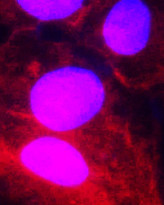
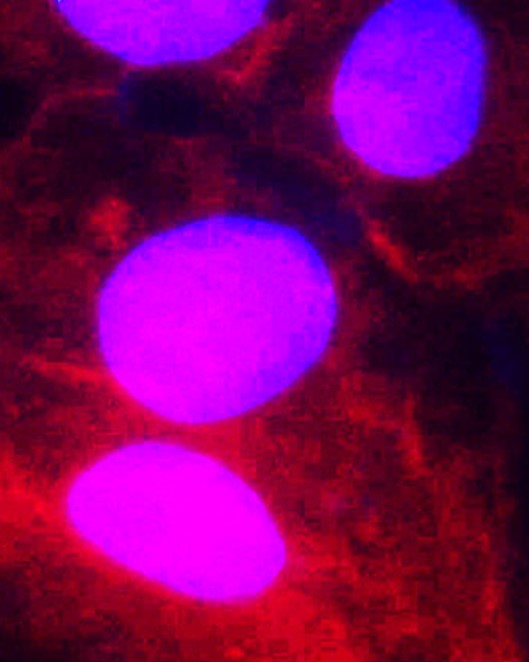
ARG66979 anti-CTGF antibody ICC/IF image
Immunofluorescence: HepG2 cells were fixed with 4% paraformaldehyde at RT for 10 min, permeabilized with 0.1% NP-40 at RT for 10 min and then cells were blocked with 5% BSA at RT for 30 min and stained with ARG66979 anti-CTGF antibody (red) at 1:200 dilution at 4°C for overnight. DAPI (blue) was used for nuclear staining.
-
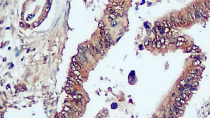
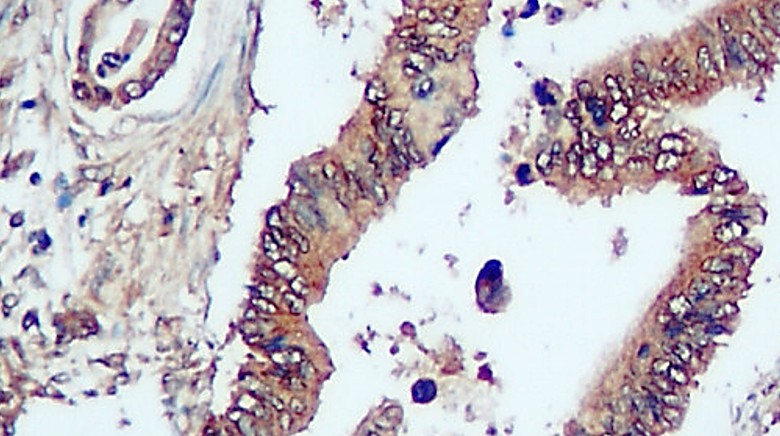
ARG66979 anti-CTGF antibody IHC-P image
Immunohistochemistry: Paraffin-embedded Human Skin carcinoma tissue stained with ARG66979 anti-CTGF antibody at 1:100 dilution. Antigen Retrieval: Boil tissue section in Citrate buffer (pH 6.0).
-
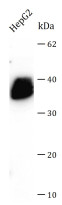
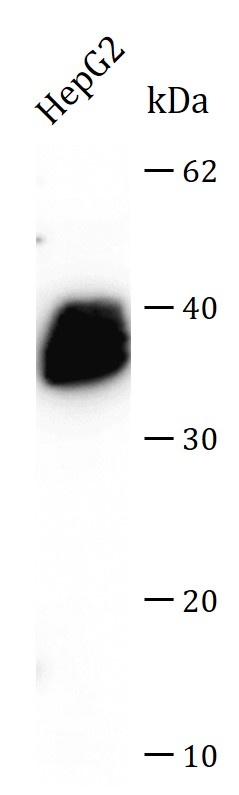
ARG66979 anti-CTGF antibody WB image (Human)
Western blot: HepG2 condition medium stained with ARG66979 anti-CTGF antibody at 1:700 dilution, overnight at 4°C.
-
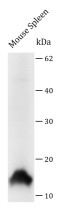
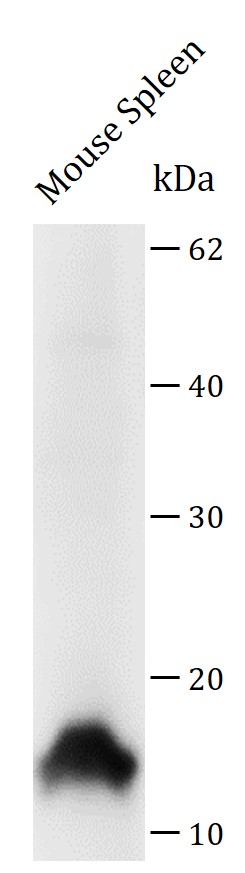
ARG66979 anti-CTGF antibody WB image (Mouse)
Western blot: 50 µg of Mouse Spleen tissue cell lysate stained with ARG66979 anti-CTGF antibody at 1:700 dilution, overnight at 4°C.