Click to copy cat No.
ARG10814
Click to copy product name
anti-PGCB antibody
anti-PGCB antibody for Confocal microscopy (Confocal),Dot blot,ELISA,ICC/IF,IHC-Formalin-fixed paraffin-embedded sections,Immunoprecipitation,Western blot and Human,Mouse,Rat
Overview
| Product Description | Rabbit Polyclonal antibody recognizes PGCB |
|---|---|
| Tested Reactivity | Hu, Ms, Rat |
| Tested Application | Confocal, Dot, ELISA, ICC/IF, IHC-P, IP, WB |
| Host | Rabbit |
| Clonality | Polyclonal |
| Isotype | IgG |
| Target Name | PGCB |
| Antigen Species | Human |
| Immunogen | Synthetic peptide around the C-terminus of PGCB protein. |
| Conjugation | Un-conjugated |
| Alternate Names | ANPRB; AMDM; GUCY2B; ECDM; Atrial natriuretic peptide receptor 2; NPR-B; SNSK; NPRBi; Guanylate cyclase B; NPRB; ANPb; Atrial natriuretic peptide receptor type B; GUC2B; EC 4.6.1.2; GC-B; ANPR-B; ANP-B |
Application Instructions
| Application Suggestion |
|
||||||||||||||||
|---|---|---|---|---|---|---|---|---|---|---|---|---|---|---|---|---|---|
| Application Note | * The dilutions indicate recommended starting dilutions and the optimal dilutions or concentrations should be determined by the scientist. |
Properties
| Form | Liquid |
|---|---|
| Purification | Affinity purified. |
| Buffer | Tris-Glycine Buffer (pH 7.4 - 7.8), Hepes, 0.02% Sodium azide, 30% Glycerol and 0.5% BSA. |
| Preservative | 0.02% Sodium azide |
| Stabilizer | 30% Glycerol and 0.5% BSA |
| Concentration | 0.5 mg/ml |
| Storage Instruction | For continuous use, store undiluted antibody at 2-8°C for up to a week. For long-term storage, aliquot and store at -20°C. Storage in frost free freezers is not recommended. Avoid repeated freeze/thaw cycles. Suggest spin the vial prior to opening. The antibody solution should be gently mixed before use. |
| Note | For laboratory research only, not for drug, diagnostic or other use. |
Bioinformation
| Database Links | |
|---|---|
| Gene Symbol | NPR2 |
| Gene Full Name | natriuretic peptide receptor 2 |
| Background | This gene encodes natriuretic peptide receptor B, one of two integral membrane receptors for natriuretic peptides. Both NPR1 and NPR2 contain five functional domains: an extracellular ligand-binding domain, a single membrane-spanning region, and intracellularly a protein kinase homology domain, a helical hinge region involved in oligomerization, and a carboxyl-terminal guanylyl cyclase catalytic domain. The protein is the primary receptor for C-type natriuretic peptide (CNP), which upon ligand binding exhibits greatly increased guanylyl cyclase activity. Mutations in this gene are the cause of acromesomelic dysplasia Maroteaux type. [provided by RefSeq, Jul 2008] |
| Function | Receptor for the C-type natriuretic peptide NPPC/CNP hormone. Has guanylate cyclase activity upon binding of its ligand. May play a role in the regulation of skeletal growth. [UniProt] |
| Calculated MW | 117 kDa |
| PTM | Phosphorylated (PubMed:26980729). Phosphorylation of the protein kinase-like domain is required for full activation by CNP (By similarity). Glycosylated. |
Images (2) Click the Picture to Zoom In
-
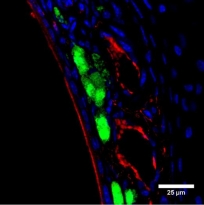
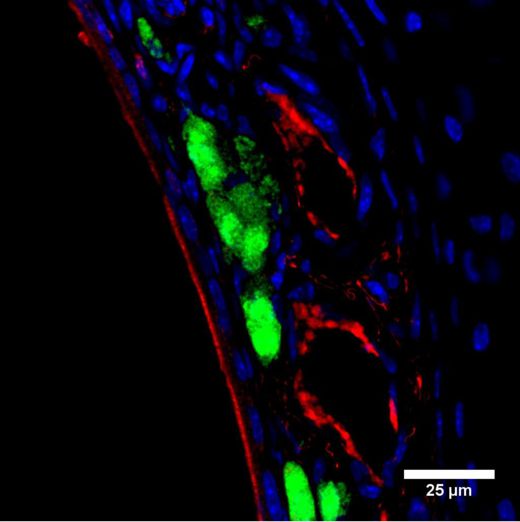
ARG10814 anti-PGCB antibody IHC image
Immunohistochemistry: Thin section of Mouse nose tissue stained with ARG10814 anti-PGCB antibody (red). Green: Grueneberg ganglion neurons. Blue: Nuclei. Staining is found on blood vessel walls.
-
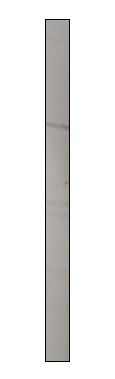
ARG10814 anti-PGCB antibody WB image
Western blot: Recombinant PGCB protein stained with ARG10814 anti-PGCB antibody at 1:500 dilution.